
Key Takeaways
- Start with a site survey to assess pathways, equipment rooms, power, access, and future growth.
- Use structured cabling with clear labels, organized racks, drawings, and test records for easier maintenance.
- Cat6 suits many workstations; fiber is ideal for long-distance, high-capacity, interference-resistant backbone links.
- Plan Power over Ethernet carefully around cable category, run length, bundle heat, and connected device loads.
- Request itemized quotes covering drops, pathways, testing, labeling, restoration, warranties, and change approvals.
- Coordinate cabling early with building, furniture, electrical, and IT plans to avoid inaccessible or disruptive installations.
- Centralized patch panels, labeled runs, and disciplined pathways simplify moves, upgrades, troubleshooting, and maintenance.
- Require certification testing, matching cable IDs, editable schedules, marked-up plans, and warranty records before final payment.
Network Cabling Company Anaheim CA for Commercial Cabling
A dependable network cabling company Anaheim CA businesses can call should begin with the building itself: its layout, occupancy, equipment rooms, ceiling access, electrical conditions, and plans for growth. Commercial cabling is not simply a set of lines run from point A to point B. It is the physical foundation for the data, voice, computer, security, wireless, and digital systems employees rely on every day.

Commercial Network Cabling Planning Checklist
- Review floor plans, occupancy, ceiling access, electrical conditions, and equipment-room locations before installation begins.
- Plan outlet counts for workstations, wireless access points, cameras, phones, point-of-sale devices, and future equipment.
- Select cable categories and pathways suited to bandwidth demands, video meetings, cloud tools, guest Wi-Fi, and building controls.
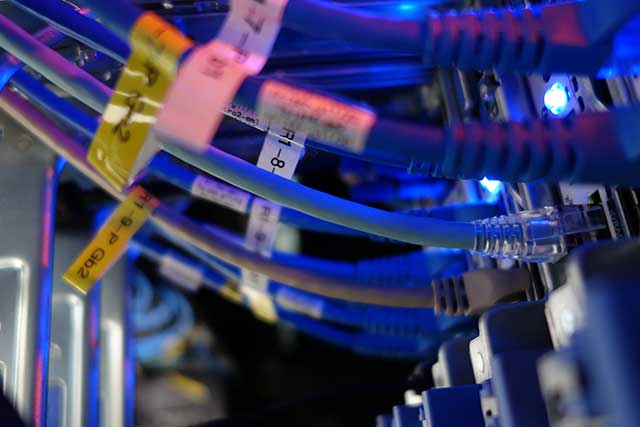
- Use labeled cables, patch panels, outlets, and racks so technicians can identify connections quickly during moves or repairs.
- Leave pathway and rack capacity for tenant changes, department growth, new devices, and later network upgrades.
- Test each connection and provide cable-run records, port maps, and labeling documentation after project completion.
Commercial Network Cabling Planning Checklist
| Planning area | What to assess | Why it matters |
|---|---|---|
| Building layout and occupancy | Room layout, occupied areas, workstation locations, and property type | Supports cabling placement that fits daily operations. |
| Equipment rooms | Location, available space, and equipment-room layout | Provides an organized home for network equipment and connections. |
| Ceiling access and pathways | Ceiling access, cable routes, pathway capacity, and outlet locations | Allows cable runs and future connections without major disruption. |
| Electrical conditions | Electrical conditions near network equipment and cabling routes | Helps account for site conditions during system planning. |
| Growth plans | Expected tenant moves, department growth, and added devices | Leaves room for sensible expansion over time. |
| Cable selection | Required cable category and demands from cloud platforms, video meetings, Wi-Fi, and connected devices | Matches cabling capacity to high-bandwidth business use. |
| Patch panels and racks | Patch-panel design, organized racks, and port arrangement | Makes changes and technician access less disruptive. |
| Labeling | Consistent labels for pathways, outlets, cable runs, and ports | Speeds up moves, additions, and connection troubleshooting. |
| Testing and documentation | Connection performance tests and records of cable runs | Provides a reference for later maintenance and intermittent connection issues. |




Network Cabling Choices, Fiber, Ping and Ring Requirements
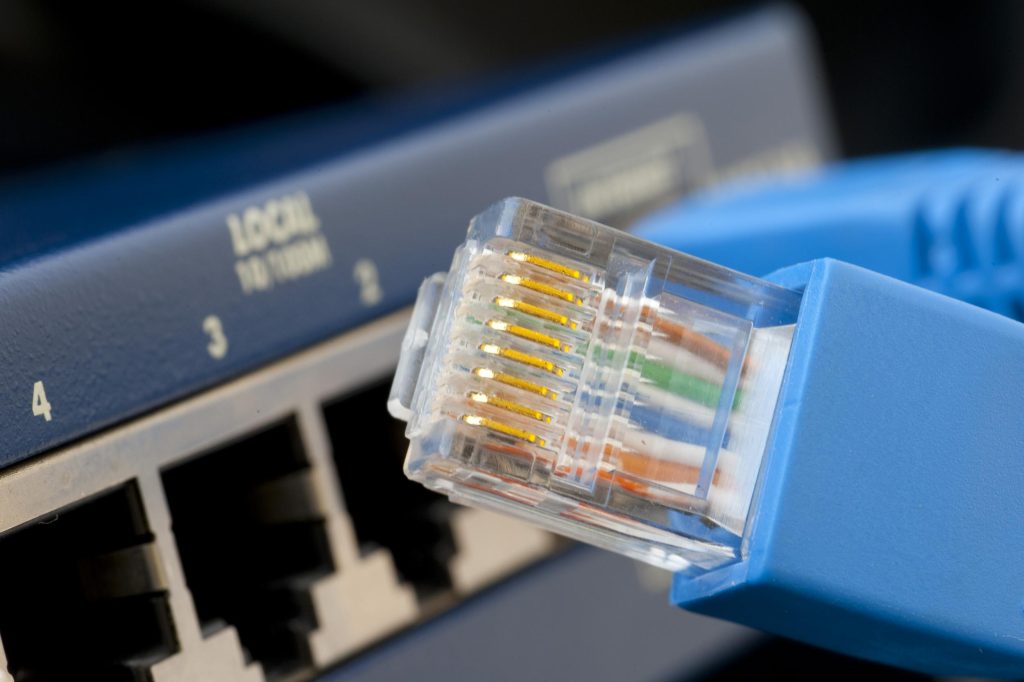
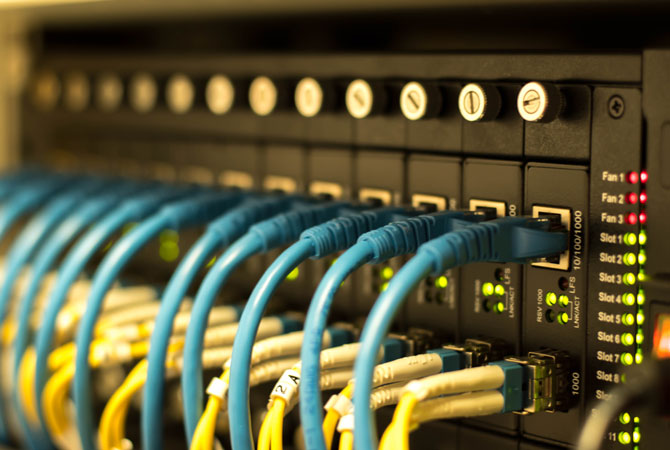
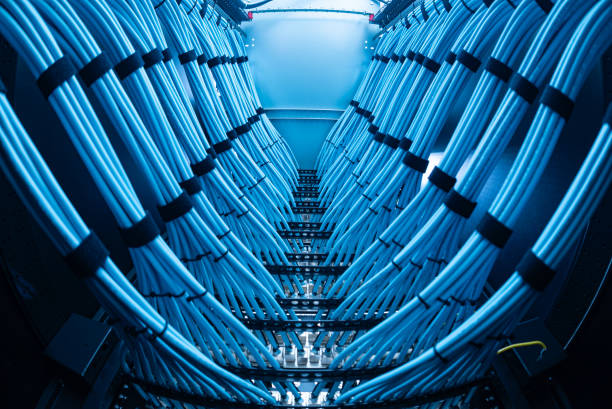
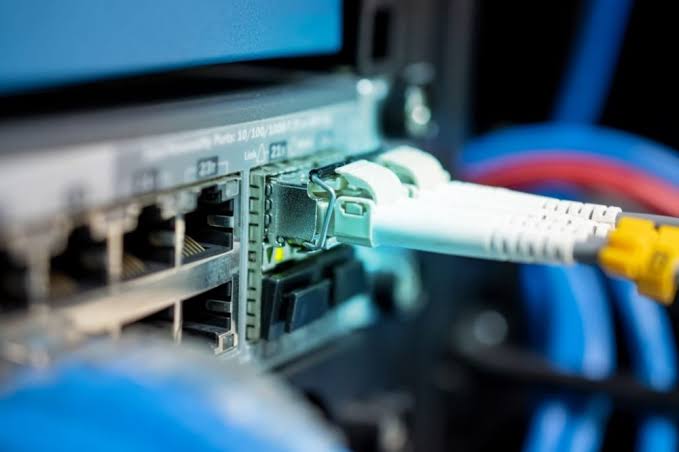
The right network cabling starts with the work people expect the connection to do. A small office with cloud files, video calls and IP phones may be well served by quality Cat6 data cabling. Larger premises, multi-floor buildings and sites with long runs often call for fiber optic links between cabinets. Copper cabling remains practical for workstations, wireless access points, cameras and phones, particularly where Power over Ethernet is required. Fiber carries far more data over greater distances and is not affected by electrical interference, making it a strong choice near plant rooms, lifts, machinery or external routes. The choice is rarely copper or fiber alone: a well-planned installation commonly uses fiber for the backbone and structured copper cabling at the desk level.
Network Cabling and Design Quick Reference
| Requirement or site condition | Recommended cabling or network approach | Why it fits |
|---|---|---|
| Desk-level connections, IP phones, cameras or wireless access points | Structured Cat6 copper cabling | Practical for endpoint connections and supports Power over Ethernet. |
| Small office using cloud files, video calls and IP phones | Quality Cat6 data cabling | Suited to common office connectivity needs. |
| Long runs between cabinets, multi-floor buildings or larger premises | Fiber optic links between cabinets | Carries more data over longer distances. |
| Plant rooms, lifts, machinery or external routes | Fiber optic cabling | It is not affected by electrical interference. |
| Mixed office network with backbone and desk connections | Fiber backbone with structured copper cabling at desk level | Matches fiber to backbone links and copper to endpoint devices. |
| Network ring topology requiring protection from a damaged link | Managed switches, protected fiber paths and configured failover | Helps prevent one damaged link from isolating part of the building. |
| Business telephone system with multiple handsets or hosted voice | Network and cabling sized for handsets and call traffic | Supports handset numbers, call traffic and hosted voice services. |